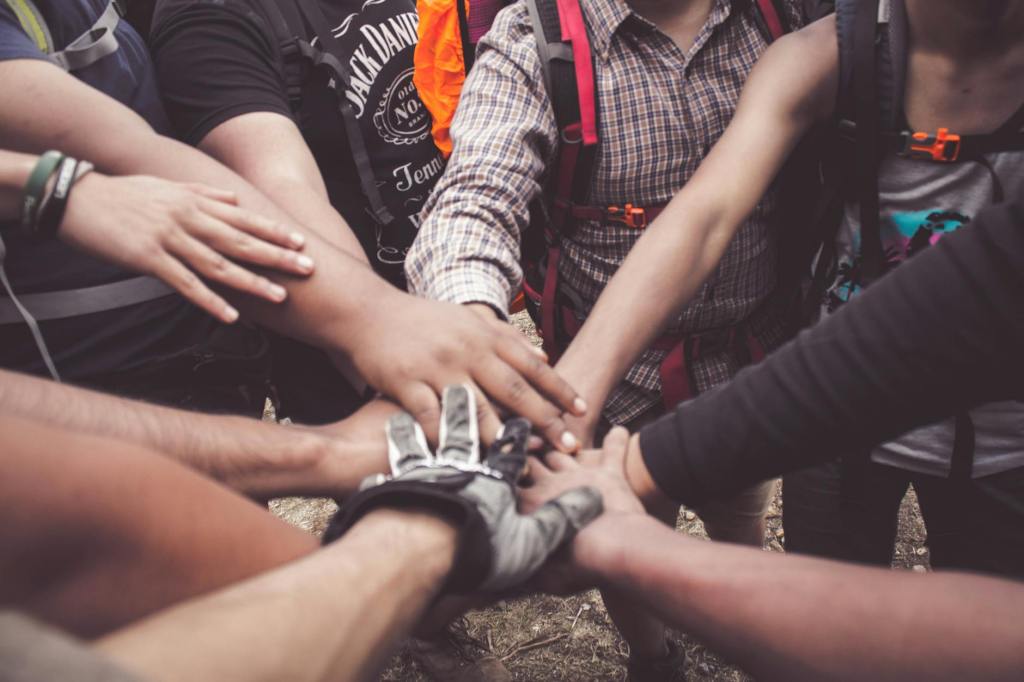
I recently joined a local Rotary club and the topic of community comes up pretty often: what makes up a community, how can people with differing backgrounds come together as a community, etc. A lot of answers tend to be to put aside your differences, work towards a common goal, find common ground with one another, but am I the only one that thinks that each individual person, with their own traits and strengths, are what make the community?
I think a lot of people focus on the negatives when it comes to bringing people together and how to get them to work together, but I tend to focus on the positives. I believe every individual has their strengths and what makes a community, or even a board of directors, work best is using each others’ strengths. Use each other’s best traits to work together.
For example, my specialty is organization, writing, and law, but I’m surely not an expert at accounting, outreach, or event coordination. That’s where other’s specialties in accounting, outreach, and event coordination come in to work with me to balance out my weaknesses. If a person comes to me and their weakness is accounting, I’m not going to write them off as not being useful because they probably have strengths and specialties elsewhere.
Having a common goal is the endpoint, but working together as a community is how you get there. I suppose I always wonder “how” or “why” when approached with a problem.
Rather than being a negative or complication, having a diverse background is what makes someone else valuable. They know things that you do not. They may know how to solve problems that you don’t because of their own personal experience. That is how individuals should come together to make up a community to work towards a common goal. However smart or educated you are, you do not know everything and have not experienced everything. You may have a solution to a problem that’s well and fine, but someone else may have gone through the same problem previously and know the more efficient work to solve it.
I am not adverse to knowing your own limits. You should be able to acknowledge when you need to reach out to someone who may know better. Frankly, it’s easier and more efficient than trying to learn something yourself anyway; and you build relationships with other people when you reach out to them and talk to them.
People want to be helpful. We all know people love talking about themselves – they want to be asked about their specialties and how they would solve a problem. Everyone wants to feel smart, to feel useful, so why focus on differences? Focus on the strengths of a person. Don’t look down on a person because they don’t know something. Figure out what they do know and lift them up by asking them about it, focus on their strengths. That’s what should make up a community – a group of individuals who each have their own strengths to work together.
If you want to work together to build a house, but you don’t know how to, are you going to find other people who don’t know how to? No, you’re going to find a carpenter, a painter, a builder, etc. You find people who can help you reach that end goal and that requires individuals working with their strengths.
It’s also simply science: natural selection and genetic diversity – picking out the strengths of a biological profile to eradicate any genetic weaknesses.
Genetic variation in a group of organisms enables some organisms to survive better than others in the environment in which they live.
Genetic Variation
So rather than setting aside differences to work together as a community, how about coming together with your differences to work together? Your individuality is what makes you special. Individuals are what make up a community. Everyone’s background, strength, and voice matters.
Stories matter, no matter how small.









 5'1" Stories
Leave a comment